8 Mediterranean destinations to travel to during Easter Week
20 Mar. 2026
Easter is one of the most eagerly awaited celebrations of the year, a deeply rooted tradition that transforms the streets each spring into scenes of devotion, culture and community spirit. During these days, locals and visitors come together to take part in processions and liturgical events that are an essential part of each destination. It is also a time when culture and gastronomy take centre stage.
Here is your ultimate guide to these 8 destinations!
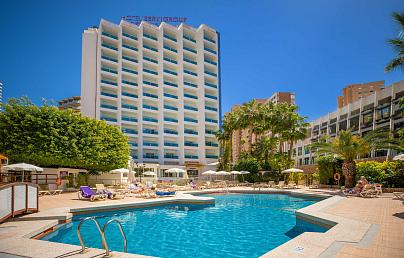
Benidorm – The awakening of the Mediterranean
In the capital of tourism, Easter takes on a spectacular character as it unfolds beneath the iconic skyline. The heart of the celebrations is, without doubt, the Church of San Jaime and Santa Ana, located on Canfali Hill, whose blue domes become the beacon of the whole event. The streets fill with processions featuring monumental floats carried on the shoulders of costaleros.
Brotherhoods: Our Lady of Hope and Peace, the Brotherhood of Nuestro Padre Jesús Nazareno (with more than 50 years of history), and the Brotherhood of the Most Holy Christ of Forgiveness and Good Death.
Must-see processions: Good Friday in Benidorm begins with the sobriety of the Stations of the Cross to Monte Calvario and the solemnity of the Procession of Silence. The climax comes in the evening with the General Procession of the Holy Burial, when all the brotherhoods parade together in a single elegant procession. Particularly striking are the women dressed in black mantillas, whose devotion beneath the candlelight moves both residents and visitors.
Local gastronomy: Mona de Pascua, a traditional bread roll, often sweet, typically made with a boiled egg.
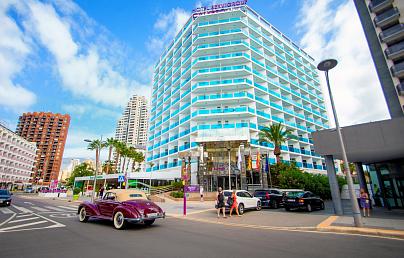
Interesting fact: Benidorm revolutionised its urban landscape by popularising skyscraper construction, transforming a small fishing village into a world-famous tourist destination known as the "Manhattan del Mediterráneo".
Villajoyosa – Colour, chocolate and tradition
Easter in Villajoyosa is a journey of contrasts, blending the colour of its seafront façades with the sobriety of its faith. In this Mediterranean corner, devotion winds its way through the narrow streets of the old town, turning each procession into a scene where history and emotion meet beneath the scent of incense and the sea.
Brotherhoods: Easter in Villajoyosa stands out for the devotion of its brotherhoods. Among the most notable are Jesús Triunfante at the opening of Palm Sunday, the Nazareno on the night of Maundy Thursday, and the Holy Sepulchre together with Our Lady of Charity, who lead the mourning of Good Friday in a deeply moving silence.
Must-see processions: The main event is the Procession of the Holy Burial on Good Friday, renowned for its sobriety as it passes through the picturesque streets of the old town. The week ends with the joyful Encounter Procession on Easter Sunday, when music and local celebration mark the end of the Passion.
Local gastronomy: Known as the birthplace of chocolate in Spain, Easter here is best enjoyed with hot chocolate, especially when paired with the traditional mona de Pascua.
Interesting fact: The old town of Villajoyosa, world-famous for its colourful houses, provides the setting for the processions. In the past, fishermen painted their façades in bright tones — red, yellow and blue — so they could recognise their homes from the sea when returning from work. Watching the floats pass between these colourful walls creates a visual contrast unlike anywhere else in Spain.
Mojácar – Almería’s white enchantment
In Mojácar’s old quarter, Easter celebrations stand out for their sense of reflection and the beauty of their routes through narrow streets. The festivities showcase the town’s Andalusian heritage, where the whitewashed houses highlight the colourful tunics of the nazarenos and the mantillas worn by the manolas.
Must-see processions: Easter begins with the joy of Palm Sunday and the emblematic “Borriquilla” procession. The solemnity deepens on Maundy Thursday with the moving night procession of Nuestro Padre Jesús Nazareno and Our Lady of Sorrows. As the crowning moment, Good Friday features the Procession of the Holy Burial, which winds through the old town in absolute silence, becoming the most moving moment of the week.
Local gastronomy: Potaje de Vigilia with chickpeas, spinach and cod. Although rabbit is meat, many households also prepare gurullos with rabbit on Easter Sunday. Among the sweets, fried ring-shaped pastries stand out, fluffy inside and crisp outside, flavoured with lemon, orange or aniseed.
Interesting fact: The claim that Walt Disney was born in Mojácar is a popular urban legend y rather than a proven fact. Although a local theory suggests he was the son of a washerwoman from Mojácar and later adopted, official American records confirm he was born in Chicago.
Orihuela Costa – The monumental heart of the Passion
Orihuela boasts an Easter celebration recognised as being of International Tourist Interest, firmly establishing itself as a cultural pillar of the Valencian Community. While the coastline of Orihuela Costa invites relaxation, its strategic proximity to the historic centre — just 20 minutes away — allows visitors to combine Mediterranean sunshine with processional parades of extraordinary artistic richness.
Brotherhoods: The Franciscan Order of Nuestro Padre Jesús Nazareno, the Samaritan, and the Silence Brotherhood.
Must-see processions: On Good Friday, Orihuela hosts the Solemn General Procession of the Holy Burial, one of the grandest in Spain: an exceptional biblical display with more than 8,000 nazarenos and 32 magnificent floats. The uniqueness continues on Holy Saturday with the Procession of the Burial of Christ, marked by the historic figure of the Caballero Cubierto. It is on this day that the famous float “La Diablesa” appears, whose entry into the Cathedral is forbidden.
Local gastronomy: Arroz de Vigilia, made with artichokes, cod and chickpeas, without meat. For dessert, almojábanas, of Arab origin, drizzled with honey.
Interesting fact: Orihuela, in the province of Alicante, is the birthplace of the Spanish poet Miguel Hernández, offering a rich insight into his life and work through his House Museum. A visit to the historic centre, the Cathedral, Santo Domingo School and the Wall Museum is essential.
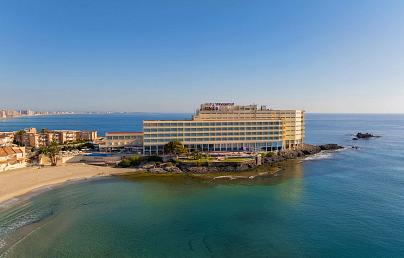
La Manga – A paradise between two seas
In this privileged setting, Easter comes alive through the blend of coastal relaxation and seafaring devotion. While La Manga buzzes with the start of the sailing season and the atmosphere of its terraces, spirituality lies just minutes away in Cabo de Palos. There, among boats and fishing nets, some of the region’s most authentic events take place, serving as a prelude to the majesty of Cartagena, whose Easter celebrations of International Tourist Interest complete an unrivalled cultural offering by the sea.
Brotherhoods: The Brotherhood of the Most Holy Christ of the Fishermen is particularly well known because its float is carried on the shoulders of fishermen and local residents.
Must-see processions: Easter in La Manga del Mar Menor is especially marked by the Procession of Christ of the Fishermen in Cabo de Palos on Maundy Thursday, combining religious fervour with the area’s seafaring tradition.
Local gastronomy: The true “gold of the Mediterranean” is its salted fish. Also typical is a creamy rice dish with rock fish and the essential touch of ñora pepper. The star dessert is paparajotes: lemon leaves coated in sweet batter, fried and dusted with sugar and cinnamon. Be careful — the leaf is not eaten; it is only used to flavour the batter.
Interesting fact: La Manga is a stretch of sand more than 20 km long that separates two seas — the Mediterranean and the Mar Menor — allowing visitors to choose between calm waters or more open sea.
Benicàssim – Between villas and Easter cakes
In Benicàssim, religious devotion and the start of the spring season come together by the Mediterranean, creating a wonderfully welcoming atmosphere. The strong participation of brotherhoods in drum performances stands out, known locally for the thunderous tamborrada or rompida de la hora.
Brotherhoods: The Brotherhood of the Holy Sepulchre is the oldest in the town and plays a leading role.
Must-see processions: Easter in Benicàssim invites reflection through the solemn Procession of Silence on Maundy Thursday. The highlight comes on Good Friday with the Procession of the Holy Burial.
Local gastronomy: The sweet star is the mona de Pascua or pastissets de cabell d’àngel, sweet pastries filled with candied pumpkin jam.
Interesting fact: Benicàssim is known as the “land of festivals”. It stands out for events such as the SanSan Festival and FIB, making the town a hub for indie, rock and pop music.
Oropesa del Mar – Living history and seafaring essence
In Oropesa del Mar, Easter unfolds as a well-balanced experience where leisure activities for all ages coexist in harmony with respect for tradition. The heart of the celebrations beats strongly in the Parish Church of St James the Apostle, a 16th-century architectural gem whose interior preserves the solemnity of the liturgical rites and serves as the starting point for the processional parades.
Must-see processions: In Oropesa del Mar, the solemn Stations of the Cross and the Encounter Procession on Easter Sunday stand out, a joyful celebration of life and local tradition.
Interesting fact: Did you know that Oropesa del Mar was at the centre of tourism in the 1990s? Its famous “Holiday City” was not only a mass success, but also the engine that placed this destination on the global map of entertainment and family holidays.
Peñíscola – Pope Luna’s refuge above the waves
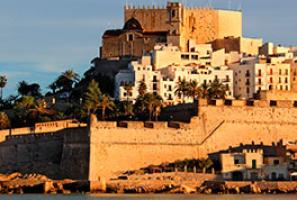
Peñíscola, internationally known as the “City in the Sea”, offers one of the most spectacular settings in the Mediterranean to experience Easter. Its old town, a walled fortress stretching into the sea, becomes far more than a tourist attraction during these days: it turns into a stage of faith where the sound of the waves accompanies the passing brotherhoods.
Brotherhoods: The Brotherhood of Our Lady of Sorrows, which reflects Marian devotion in the town, and the Brotherhood of the Holy Sepulchre, responsible for carrying the Passion images in the Good Friday procession.
Must-see processions: In Peñíscola, Good Friday begins with a Stations of the Cross that takes on a spectacular dimension as it winds through the cobbled streets of the medieval citadel. The day culminates in the Procession of the Holy Burial, when the floats pass through the historic gateways of the walls beneath solemn lighting. Finally, on Easter Sunday, the Encounter Procession fills the old town with music and joy after the days of silence.
Local gastronomy: A powerful Lenten seafood stew is cuttlefish with chickpeas. The classic arroz a banda is also ever-present on the terraces beside Pope Luna’s Castle. For dessert, flaons, pastries filled with curd cheese.
Interesting fact: Peñíscola is renowned for its imposing Castle of Pope Luna, a Templar fortress that served as the refuge of Pope Benedict XIII, perched on a rocky headland.
Some curiosities you may not know about Easter
Lunar calendar: Its date is an astronomical dance. Easter is always celebrated on the Sunday following the first full moon of spring, so it falls between March and April each year.
The marketing of faith: Processions became firmly established in the 17th century as a response to the Counter-Reformation. The Church brought art into the streets to move the people emotionally and reaffirm its dogmas in the face of Protestantism.
The weight of devotion: A paso or float is a feat of artisan engineering that can weigh between 700 and 1,200 kilos. Behind it — or underneath it — dozens of people carry that weight purely out of faith.
The mystery of the capirote: Nazarenos wear this pointed hood to raise their penitence towards heaven while preserving the sinner’s anonymity. An image of humility that is now recognised worldwide.
A sound of mourning: In places such as Zaragoza or Albacete, silence is broken by the tamborada. Thousands of drums beat in unison in an overwhelming thunder that symbolises the mourning of the earth.
The saeta: It is the cry of flamenco turned into prayer. In Andalusia, the procession stops beneath a balcony to hear this improvised song, sending shivers through the entire square.
Sweets for endurance: Why so many torrijas and monas? In times of fasting and abstinence, farm workers needed extra energy. These sweets, made with bread, milk, egg and honey, were the permitted “fuel” to get through the long days of Lent.
Easter in the Mediterranean is much more than a religious event; it is the awakening of spring amid the scent of orange blossom and the sound of drums. Whether for faith, gastronomy or simple cultural curiosity, each of these 8 destinations offers a unique window into the living history of our coastline. So, which corner of the Mediterranean will you lose yourself in this year?
Do you want to know the most beautiful town in the province of Alicante? If you travel to Benidorm, you will have no excuse to miss it. And it is that less than half an hour from your hotel you can enjoy this little corner of unsurpassed beauty: Guadalest.
The picturesque old town full of attractive museums, a beautiful castle and a spectacular reservoir surrounded by unspoiled nature are just some of the reasons why it will steal your heart. An immense lake with turquoise waters ideal for walking and even taking a bath.